BOAS Surgery
BOAS Surgery for Flat-Faced Dogs in Chilliwack
Our veterinarians assess breathing trouble in Bulldogs, French Bulldogs and Pugs at our clinic.
Promontory Animal Hospital, on Thomas Road in Chilliwack, provides BOAS surgery for flat-faced dogs. Depending on what your dog's examination finds, the surgery can widen narrowed nostrils and shorten an overlong soft palate so more air reaches the lungs.
- Thomas Road, Chilliwack
- Open 8:00am to 8:00pm, seven days a week
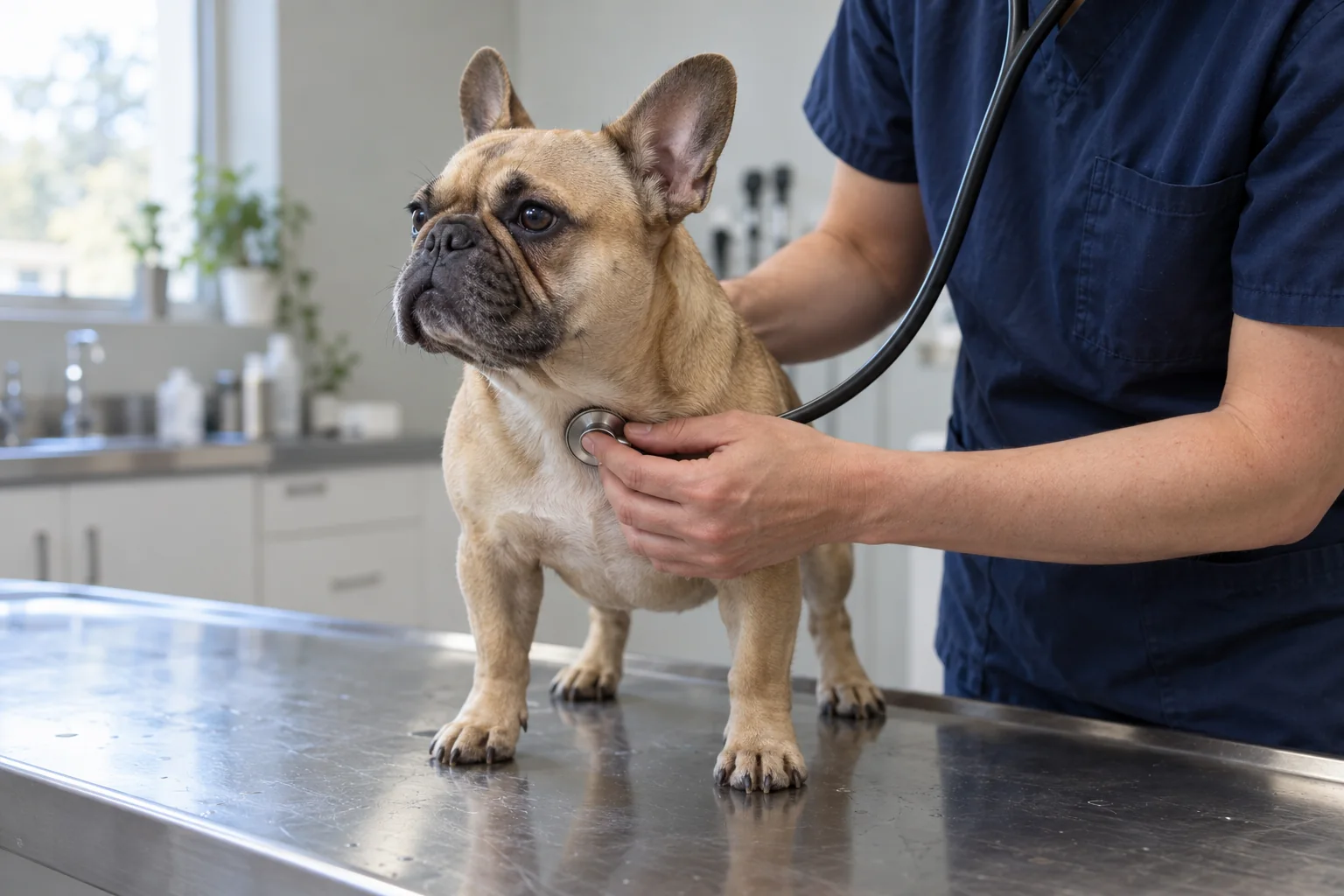
Signs of BOAS in dogs
French Bulldog breathing problems and BOAS in other flat-faced breeds show first as noise, tiring easily and overheating. Watch your dog at rest, asleep and on walks:
-
Loud dog snoring, even while awake.
-
Snorting, wheezing or noisy breathing at rest.
-
Tiring quickly on walks, or falling behind on exercise.
-
Hard panting in warm weather, and slow to recover after walks.
-
Gagging when swallowing, or bringing food back up after eating.
-
Short pauses in breathing during sleep.
Filming your dog breathing at rest and asleep helps our veterinarians at the examination.
When breathing trouble needs urgent care
These signs need care straight away:
-
Blue or grey gums
-
Laboured or open-mouth breathing at rest
-
Collapsing
-
Signs of heatstroke after heat, humidity or exercise
Bring your dog straight in for urgent care during our opening hours. We welcome walk-ins for urgent cases, seven days a week. For routine appointments, booking ahead is recommended. We are open 8:00am to 8:00pm, seven days a week. We are not a 24-hour emergency or critical care facility. Outside our clinic hours, we encourage you to contact a nearby 24-hour emergency animal hospital for urgent care.
What is brachycephalic syndrome in dogs?
Brachycephalic obstructive airway syndrome (BOAS) is a group of narrowings along the airway of a flat-faced dog that make breathing harder. One dog can have some or all of them, and each adds to the blockage. The parts involved are:
- Stenotic nares (narrowed nostrils). The nostrils are too small and can collapse inward when the dog breathes in.
- Elongated soft palate. The back of the roof of the mouth is too long, and its tip hangs into the airway.
- Everted laryngeal saccules. Small pouches of tissue in front of the vocal cords are pulled into the airway.
- Hypoplastic trachea. Some dogs, English Bulldogs in particular, have a windpipe that is too narrow for their size.

Does my dog need BOAS surgery?
Not every flat-faced dog needs BOAS surgery, and our veterinarians decide only after examining your dog. Narrowed nostrils can be seen on a physical exam. The soft palate and laryngeal saccules can only be fully assessed under a light anaesthetic.
Mild cases are often managed without surgery. That means keeping your dog at a healthy weight, using a harness instead of a neck collar, and avoiding heat, humidity and hard exercise. Our weight management for dogs helps with the first of these. Surgery is considered when the narrowed airway causes distress, gets worse or blocks breathing.
What BOAS surgery aims to correct
BOAS surgery, sometimes called brachycephalic surgery, aims to open the parts of the airway that block airflow. Depending on the exam, it can include:
What the surgery can include
- Widening the nostrils by removing a small wedge of tissue, known as stenotic nares surgery.
- Soft palate surgery for dogs, which shortens an elongated soft palate.
- Removing everted laryngeal saccules, the small pouches pulled into the airway near the vocal cords.
What surgery cannot change
There is no surgery that corrects a narrow windpipe, so the plan works on the parts that can be changed. BOAS surgery is part of our veterinary surgery at our clinic, which also includes eye surgery for dogs.
Our BOAS surgery process
- 01
Examination
Our veterinarians check the nostrils and listen to the breathing, then explain how the soft palate and saccules are assessed under anaesthesia.
- 02
X-rays and blood work
We take neck and chest X-rays on our in-house digital X-ray to check the width of the windpipe, and run pre-anaesthetic blood work in our clinic.
- 03
Written estimate
Our veterinarians explain the results, including what can only be confirmed under anaesthesia, and you approve a written estimate before surgery.
- 04
Surgery
Under anaesthesia, our veterinarians correct the parts of the airway the assessment shows are narrowed, and our veterinary staff monitor your dog throughout.
- 05
Pain management
We plan pain relief from the first assessment through recovery.
Anaesthesia for brachycephalic dogs
Throughout anaesthesia, our veterinary staff continuously monitor oxygen levels, heart rate and blood pressure. Attentive recovery care follows while your dog wakes up.
A flat-faced dog carries a higher anaesthetic risk than a dog with a longer nose. Its airway is narrow to begin with, and swelling or bleeding after surgery can narrow it further while the dog wakes up.
The pre-anaesthetic blood work shows how the liver and kidneys are working. We also assess each dog's individual risk before anaesthesia, and our veterinarians explain it at the examination, before you decide on surgery.

Recovery at home
After surgery, the airway can swell while it heals, so watch your dog's breathing and eating closely at home.
Keep your dog calm and cool, with a harness instead of a neck collar. Bring your dog straight in if you notice:
- Breathing that becomes noisier or more laboured.
- Regurgitating or gagging after eating. Regurgitation can lead to aspiration pneumonia, a lung infection caused by breathing in food or fluid.
Outside our clinic hours, we encourage you to contact a nearby 24-hour emergency animal hospital for urgent care.
How much does BOAS surgery cost?
The cost depends on what the examination finds and which parts of the airway need treatment. You receive a written estimate you approve before any procedure begins.
What shapes the estimate
The X-rays and blood work before surgery, and the anaesthetic and monitoring during it, also shape the estimate.
Financing and payment
Financing is available through iFinance, and we take Visa, Mastercard, American Express, Interac debit and cash.
Explore more of our services
Pet dental care
Cleanings, dental X-rays and extractions for dogs and cats.
Dog and cat dental cleaningDiagnostics & imaging
Digital X-ray and in-house diagnostics to find what hurts.
Pet X-ray and diagnosticsPet vaccinations
Core and lifestyle vaccines for dogs and cats.
Dog and cat vaccinationsParasite prevention
Protection from fleas, ticks, heartworm and intestinal worms.
Flea, tick and worm preventionQuestions about BOAS surgery
Call 604-426-1057Reviewed by our veterinarians, Dr Gurpreet Kaur, DVM, and Dr Ravinder Singh, DVM.
Which brachycephalic breeds are most at risk of BOAS?
Cornell University lists English Bulldogs, French Bulldogs, Pugs and Boston Terriers as most often affected. Boxers, Pekingese and Shih Tzus can be affected too. Not every flat-faced dog shows signs. Pug breathing problems, for example, range from mild snoring to tiring quickly on walks, so we examine each dog before recommending anything.
Why does my dog snore so loudly?
In a flat-faced dog, loud snoring and snorting point to an obstructed airway, not simply a breed habit. University of Cambridge researchers note that dogs with BOAS can snore while awake. If the snoring is loud or frequent, we recommend a veterinary examination.
Does BOAS get worse with age?
It can. Cornell University notes symptoms may worsen as a dog ages, as the work of breathing can leave throat tissue swollen and inflamed. This can lead to laryngeal collapse, where the cartilage of the voice box gives way and narrows the airway further.
At what age should BOAS surgery be done?
Our veterinarians decide the timing for each dog after an examination. Cornell University reports that most dogs are diagnosed between one and four years of age, and that earlier intervention tends to give better results.
Is BOAS surgery dangerous?
It carries real risk, and more than for a dog with a longer nose. University of Cambridge researchers name recovery from the anaesthetic as the main risk, because the airway can swell after surgery, and regurgitation can lead to aspiration pneumonia. We run pre-anaesthetic blood work, assess each dog's risk first and continuously monitor oxygen levels, heart rate and blood pressure.
Is French Bulldog breathing surgery worth it?
Surgery does not cure BOAS or give a dog a normal airway, but University of Cambridge researchers note corrective surgery can provide a better quality of life. Whether it suits your French Bulldog depends on how much the narrowed airway affects daily life, which our veterinarians assess at the examination.
Does pet insurance cover BOAS surgery?
It depends on your policy, so check your cover with your insurer before surgery is booked. We accept pet insurance. We provide the invoices and documentation you need to submit your claim. We work with Trupanion, Petsecure, Fetch and Pets Plus Us.
Book a BOAS examination in Chilliwack
We are accepting new clients at Thomas Road, Chilliwack, serving Sardis, Promontory, Vedder and Yarrow. You receive a written estimate you approve before any procedure begins. Register as a new client, or reach us at info@promontoryvet.ca.
What you can count on
- Open 8:00am to 8:00pm, seven days a week
- Neck and chest X-rays on our in-house digital X-ray
- Pre-anaesthetic blood work run in our clinic
- Oxygen levels, heart rate and blood pressure monitored throughout anaesthesia