Parasite Prevention
Flea and Tick Prevention Chilliwack
Flea, tick, worm and heartworm protection for dogs and cats at Promontory Animal Hospital
Promontory Animal Hospital provides parasite prevention for dogs and cats in Chilliwack, covering four things at once — fleas, ticks, intestinal worms and heartworm. We examine and weigh your pet first, and test for heartworm before prescribing a preventative. Where the picture is unclear, we run a faecal test in-house. Then our veterinarians match the product to that animal — species, weight, age and how it actually lives, rather than assumed.
Protect your dog or cat from fleas, ticks and worms.
- Thomas Road, Chilliwack
- Open 8:00am–8:00pm, 7 days a week
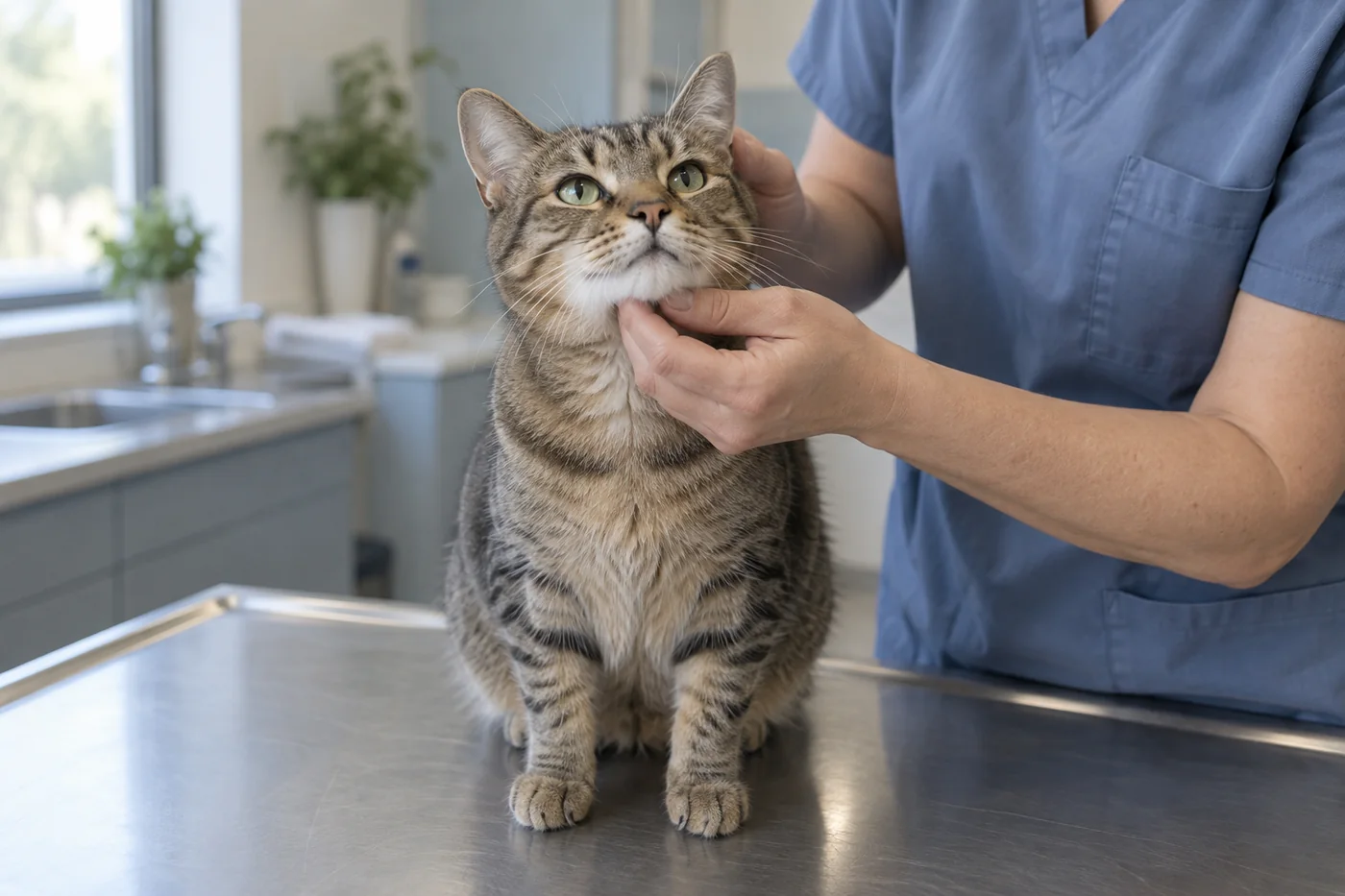
One plan for fleas, ticks, worms and heartworm
Fleas, ticks, intestinal worms and heartworm are four different problems, and we cover all four in one tailored plan for your dog or cat — matched to species, weight, age and lifestyle, because a four-kilogram indoor cat and a trail-running dog do not carry the same risk.
- Flea and tick protection
- Intestinal worm treatment
- Heartworm testing and prevention
- In-house faecal testing
4 in 1
parasites covered in one plan
One visit and one plan, matched to your pet. We test where it is warranted, dispense only what that animal needs, and tell you the dose and the next due date before you leave.
Worms in dog poop, and the other signs owners notice first
The signs of fleas, ticks and worms are easy to miss early on, and some parasites stay hidden until a test finds them. When there is something to see, these are what owners tend to notice first.
-
Worms in dog poop, or rice-like segments in the fur under the tail.
-
A pot belly on a puppy, a kitten not gaining weight, or scooting along the floor.
-
Scratching that will not settle, scabs along the back, or black grit in the coat — flea dirt.
-
A tick as a firm lump near the ears, neck or toes. Cats get them too, and hide them better.
Pets in Chilliwack and the Fraser Valley can commonly pick up parasites, and none waits for a symptom.
Parasite control is half of preventive care; the other half is core and lifestyle vaccines for dogs and cats.
Flea treatment for cats and dogs, and worming for both
We treat both species at the same visit, with different products — a dose written for one can be unsafe for the other.
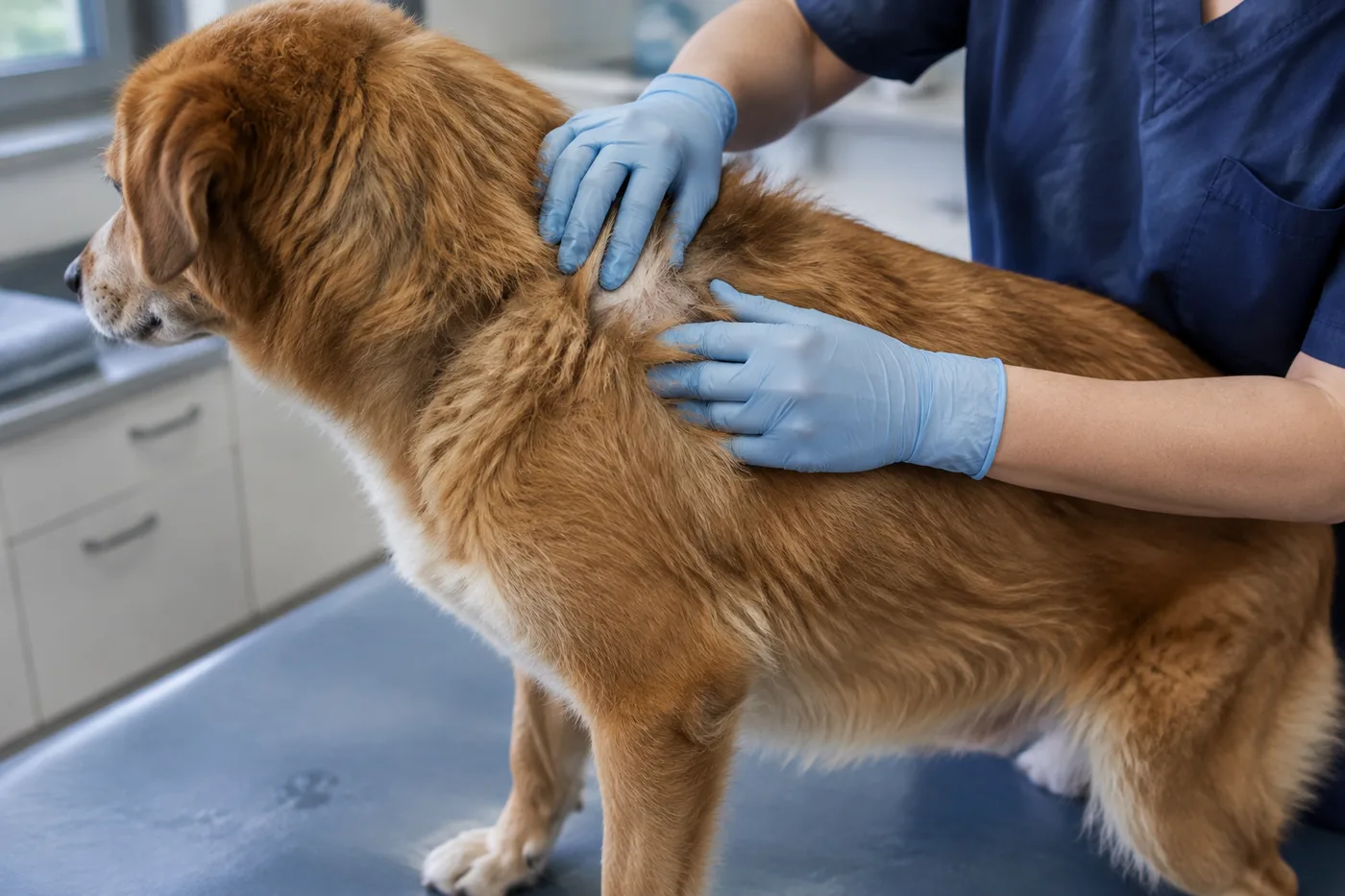
Dog flea and tick prevention
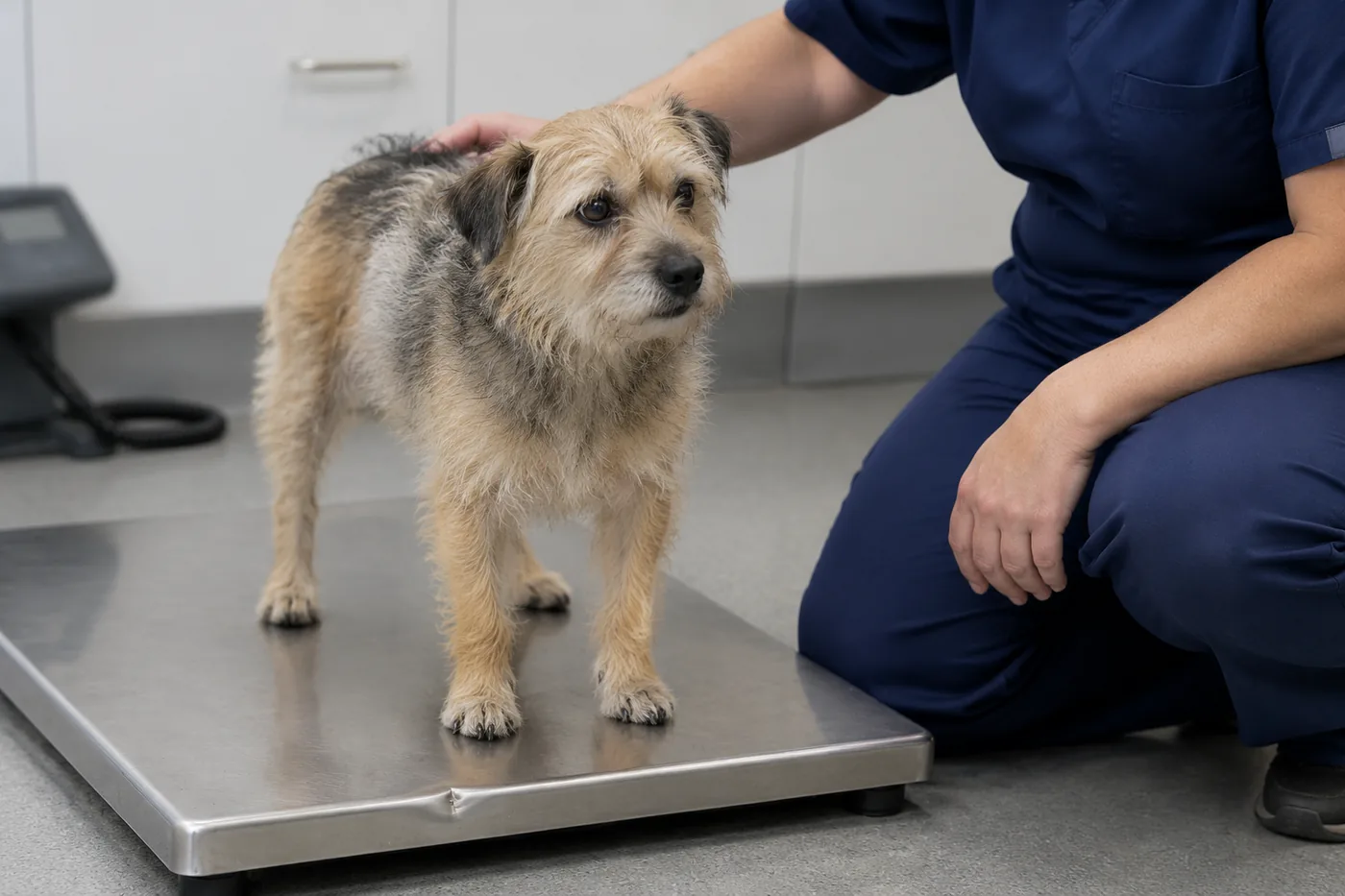
We dose flea and tick treatment by weight, so your dog goes on our scale before we dispense anything: the dose follows body weight, and a guess either leaves gaps in the cover or gives more than is safe. Options differ too — monthly or longer-lasting, by mouth or on the skin — and we match that to your dog and your routine. Cat flea and tick prevention is a separate product at a separate dose, never the dog’s.
- Not every flea product kills ticks
- Swimming and baths narrow the choice
- A cat gets its own product, applied where it cannot lick
- The itchy pet is rarely the only one with fleas
Dog deworming, and what cats need
When the picture is unclear, we run an in-house faecal test before dog deworming, because the common intestinal worms each need a different treatment — the test tells us which one we are dealing with, so we treat what is actually there instead of guessing. We approach cat deworming the same way, and a tapeworm in a cat usually points back to a flea nobody has spotted. Flea prevention for puppies begins at an age and weight we check at the exam.
- Roundworm, hookworm, whipworm and tapeworm, each treated for what it is
- The faecal test names the worm by its eggs
- Puppies and kittens need a course spread over weeks
- Retreatment timed to catch the next hatch
Heartworm prevention for dogs, and what needs a prescription
Some of this needs a prescription; the rest is housekeeping. Mixing them up is why a flea problem drags on for months.
Why so much of this is prescription-only
Heartworm prevention for dogs is prescription-only, so we need an exam and a current weight before we choose a product — and we run a heartworm blood test in-house first, because a preventative is only the right call once we know the pet does not already carry it. We decide a cat’s plan separately, on how it actually lives. Combination products covering fleas, ticks and worms are prescription too, so one of our veterinarians sees the animal first.
What you can safely do at home
Flea control matters because most of a flea population is eggs and larvae in carpet and bedding, not adults on the pet. Wash bedding hot, vacuum daily for weeks, empty the canister outside. Neither the cleaning nor the preventative replaces the other.
How to remove a tick from a dog, and when to call us
Fine-tipped tweezers as close to the skin as they will go, then a steady pull straight out. No twisting, no lit match, no petroleum jelly. On a cat, check the head, ears and chin, where it cannot groom.
Phone us if the mouthparts stay behind, if the spot swells, or if your pet turns stiff, quiet or off its food afterwards. The life cycle of a tick happens in grass, so one on your pet usually means more nearby. Ticks can carry Lyme disease and anaplasmosis.
We can usually see urgent parasite problems the same day, 8:00am–8:00pm, seven days.
What happens when you bring your pet in
Every parasite visit runs the same four steps, so you know what to expect before you arrive.
- 01
The exam
We check nose to tail: skin, coat, ears and mouth. If something else needs attention — a mouth that needs a pet dental cleaning — we tell you then.
- 02
Weight and testing
We weigh your pet, and where it is warranted we run a faecal sample or a heartworm blood test through our in-house diagnostics and imaging first.
- 03
The plan, in writing
What we recommend for your pet, why, and what it will cost — so nothing is dispensed before you have agreed to it.
- 04
Home, and the next one
We tell you the dose, the interval and when the next one is due before you leave.
Can you see my pet today?
8am–8pm
Open seven days a week
Promontory is not a 24-hour hospital. We provide urgent care inside those hours; outside them a pet in trouble needs an emergency hospital open then.
Accepting new clients for dogs and cats
Looking for flea and tick treatment for dogs or cats near you from Sardis, Promontory, Vedder, Yarrow or the wider Fraser Valley? We are on Thomas Road in Chilliwack.
What flea and tick prevention costs depends on your pet
We publish no price: a four-kilogram cat and a thirty-kilogram dog are not the same prescription, and testing may be needed first.
A written estimate first
A written estimate you approve before any procedure begins.
Financing and payment
Financing options are available. Visa, Mastercard, American Express, Interac debit and cash.
Pet insurance accepted
We accept pet insurance and provide the documentation for your claim. Insurers we work with include Trupanion, Petsecure, Fetch and Pets Plus Us.
Flea, tick and worm prevention near you in Chilliwack
Promontory Animal Hospital provides flea, tick, worm and heartworm prevention for dogs and cats throughout Chilliwack and the surrounding Fraser Valley. Our veterinary hospital is on Thomas Road in Chilliwack and serves pet owners from:
- Chilliwack
- Sardis
- Promontory
- Vedder
- Yarrow
- and surrounding Fraser Valley communities
If you are searching for flea and tick treatment near you, or parasite prevention in Chilliwack, our veterinary team can assess your pet and recommend the next step.
Explore more of our services
Pet dental care
Cleanings, dental X-rays and extractions for dogs and cats.
Dog and cat dental cleaningDiagnostics & imaging
Digital X-ray and in-house diagnostics to find what hurts.
Pet X-ray and diagnosticsPet vaccinations
Core and lifestyle vaccines for dogs and cats.
Dog and cat vaccinationsEmergency & urgent care
Same-day help for sick and injured pets during our open hours.
Urgent care for your petCan indoor cats get fleas if they never go outside?
Yes, and more often than owners expect. Fleas hitchhike in on a trouser leg or on a dog that does go out, and once inside they complete the whole cycle in carpet and bedding. Flea and tick treatment for cats matters indoors too — lower risk than an outdoor cat, not no risk.
Can humans catch worms from dogs?
Some worms can pass to people; hookworm and roundworm are the ones worth knowing. It happens through eggs in faeces, not through a lick or a shared bed, so hand-washing and picking the stool up promptly do most of the work. Children need the most care.
Can indoor cats get worms?
Yes. The usual route is a flea — a cat swallows one while grooming and picks up tapeworm from it, which is why a cat with worms often has a flea problem nobody has spotted. Bring a sample and we will identify what we are treating.
What deworming schedule for puppies do you recommend?
We worm puppies and kittens repeatedly across their first months rather than once, because worms passed on from the mother keep hatching in stages. The intervals depend on age at the first visit and on the faecal test, so we set the schedule then and write it down.
Does my pet really need this all year, or only in summer?
A fair question, and it depends on the pet. A dog on Fraser Valley trails most weekends carries a different exposure from a senior cat who never leaves the sofa. Our position is year-round prevention where the pet's lifestyle calls for it.
Reviewed by our veterinarians, Dr Gurpreet Kaur, DVM, and Dr Ravinder Singh, DVM.
Book parasite prevention for your dog or cat
Call 604-991-2745 or use the contact form and tell us what you have noticed. Promontory Animal Hospital is at Unit 104 – 46193 Thomas Road, Chilliwack.
What you can count on
- Open 8:00am to 8:00pm, seven days a week
- A written estimate you approve before any procedure
- Testing, prevention and treatment in-house
- Accepting new dog and cat clients